Home EV Charger Installation in Australia: Costs & What to Know
Thinking about installing an EV charger at home? Here's what Australian homeowners need to budget, plan, and ask their electrician before booking.

Electric vehicles are appearing on Australian driveways in serious numbers, and the question most new EV owners ask within the first week is: how do I charge at home properly? Plugging into a standard 10-amp GPO works in a pinch, but it's slow, inefficient, and not what your car — or your switchboard — was designed for long-term.
This guide walks you through the real costs, the hardware options, and the electrical work involved in getting a dedicated EV charger installed at an Australian home.
Why a Dedicated EV Charger Is Worth It
A standard 10-amp household outlet delivers roughly 2–2.4 kW of charging power. That means a 70 kWh battery pack (common in mid-range EVs) could take 30+ hours to fully charge from empty. A dedicated Level 2 home charger — typically a 7 kW or 11 kW unit — cuts that to 8–10 hours overnight, which is exactly what most households need.
Beyond speed, a dedicated charger is safer. Sustained overnight draws on a standard GPO via an extension lead creates heat and fire risk. A hardwired or wall-mounted EVSE (Electric Vehicle Supply Equipment) is designed specifically for the job.
What It Will Cost in 2026
Costs vary depending on your switchboard's condition, how far the charger is from your meter box, and your state.
| Component | Typical Cost (AUD) |
|---|---|
| 7 kW wall-mounted EVSE unit | $600 – $1,500 |
| Electrician installation (straightforward) | $400 – $900 |
| Switchboard upgrade (if needed) | $1,200 – $3,000 |
| Trenching / cabling for detached garage | $500 – $2,000+ |
| Total typical range | $1,000 – $5,000+ |
A simple install — modern switchboard, charger going on an internal garage wall close to the meter box — usually lands in the $1,200–$2,000 range all-in. Complex jobs with long cable runs, trenching across a driveway, or an outdated switchboard can push well past $4,000.
Ready to get started? Post your job free and local electrical tradies can quote.
Choosing Your Charger
7 kW single-phase is the most common choice for Australian homes. Most residential properties are single-phase, and 7 kW is enough to fully charge most EVs overnight.
11 kW or 22 kW three-phase units charge faster but require three-phase power at your property — not standard in most Australian suburbs. If you're unsure whether your home has three-phase, your electrician can check at the switchboard.
Smart chargers with Wi-Fi, app control, and off-peak scheduling are worth considering if you're on a time-of-use electricity tariff. Charging at off-peak rates (often midnight to 6am) can significantly cut your running costs.
Solar integration: If you have rooftop solar, some EVSE units can communicate with your inverter to maximise self-consumption — charging your car primarily with excess solar generation. Brands like Zappi are popular for this.
What the Electrical Work Involves
All EV charger installation in Australia must be done by a licensed electrician. This is not a DIY job under any state's regulations — the charger needs a dedicated circuit, correct breaker sizing, and an Electrical Safety Certificate on completion.
Your electrician will typically:
- Assess your switchboard capacity and condition
- Install a dedicated circuit with an appropriately rated circuit breaker (usually 32A for a 7 kW charger)
- Mount and wire the EVSE unit
- Test and issue the required compliance certificate
If your switchboard is old — ceramic fuses, no RCDs, or already running close to capacity — expect to budget for an upgrade at the same time. It's often better to do it now than after the charger is in.
Key Questions to Ask Your Electrician
- Does my switchboard have enough spare capacity for a 32A circuit?
- Do I need an RCD upgrade to comply with current standards?
- Is my home single-phase or three-phase?
- What's the most direct cable route to my parking area?
- Will installation require council permits or network provider notification?
In some states and territories, your electrician may need to notify your electricity distributor (not retailer) before connecting a charger above a certain capacity. Your sparky should handle this, but it's worth confirming.
Actionable Takeaway
Before calling an electrician, know where you plan to park and charge, check whether your home has a modern switchboard, and decide if you want smart/solar-ready features. Get at least two quotes and ask each electrician to itemise switchboard work separately from the charger install — that way you can compare like for like. Request the compliance certificate when the job is complete; you'll need it for insurance purposes and potentially for resale.
Done researching? The next step is getting real quotes.
Get My Quotes — It's Free →No obligation. Takes 60 seconds.
Business for sale

Established Blue Wheelers Mobile Dog Grooming Business – Nundah, Brisbane Northside
Established Blue Wheelers mobile dog grooming business on Brisbane's northside: 115 customers, about $76,500 in takings over the last 12 months, booked 4–5 days a week, with full training and handover.
Local tradies on TradiHub AI
See all →We don't have a matching tradie listed yet. Post your job free and local tradies can quote you directly.
Post a job, free →More tradies on TradiHub AI

DLK Studio
Web Development & Design
Masteredge Carpentry & Maintenance
Carpentry · Decking & Pergolas · Fencing
Brisbane Bicycle Service
Bike Repair & Custom Builds
Find local:Electricians in Brisbane CBDElectricians in ChermsideElectricians in NundahElectricians in Carindale
For tradies
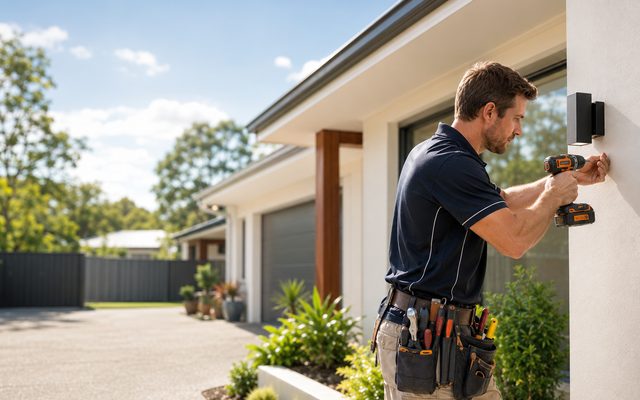
Tradies: get found by local homeowners
A free-to-start local directory with your real Google reviews and an ABN-checked tick. No per-lead fees, no lock-in. Founding members wanted.